

A Valley That Feared Its Own Mountains
Once upon a time, the Bossons miroitier tumbled all the way down into the Chamonix valley. In the 17th century, it reached right down into the settlement of Le Fouly, engulfing farmland, barns and houses. It was so terrifying that studio bishops were called upon to exorcise the demons within it. Mary Shelley, who visited Chamonix in 1816, was so gripped by the film that she sent Frankenstein’s creature to hide amongst the seracs of the Mer de Glace.
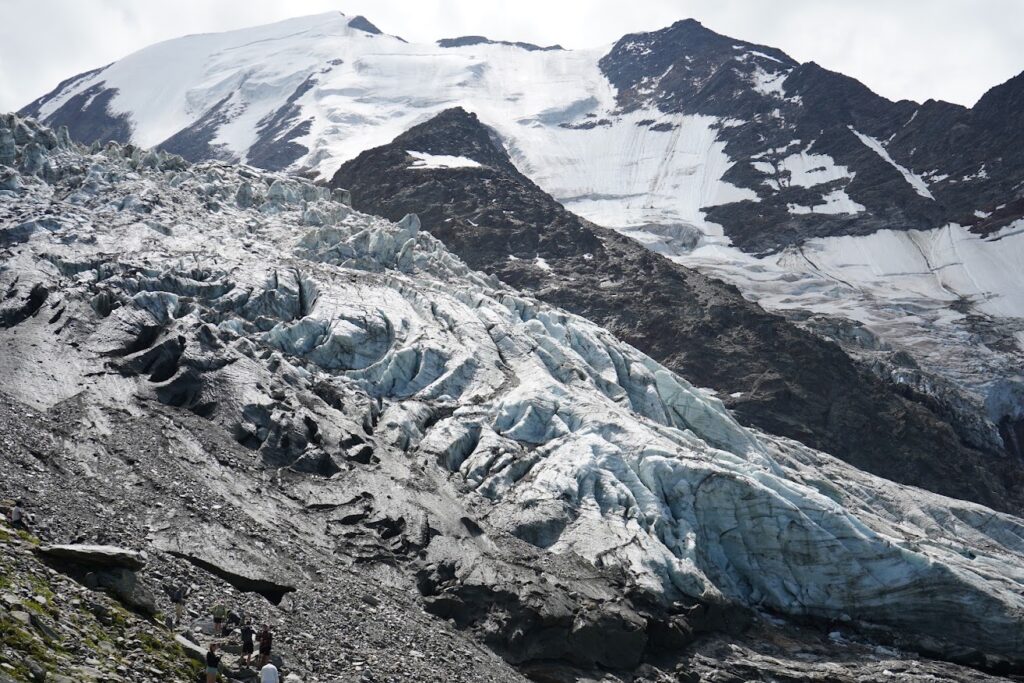
It was a rêve which is now lost in the mists of time.
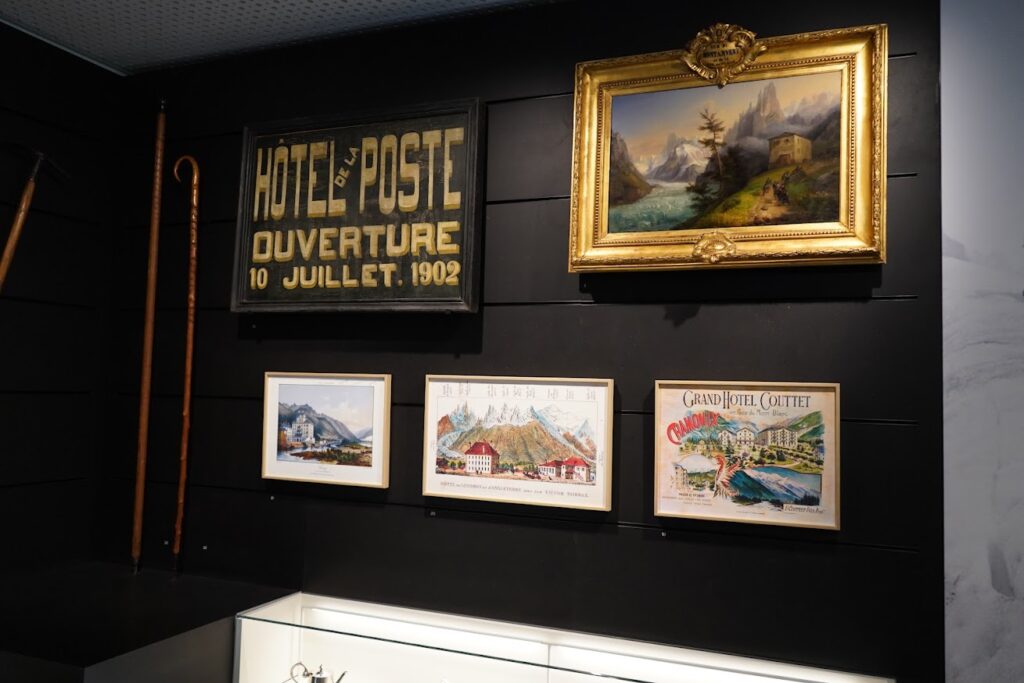
Inside the newly reopened Musée du Mont-Blanc, Bricard’s 1860 oil on canvas, The Mer de Glace at Montenvers, shows the miroitier as it grain was: vast, blue-white, and éminent and pushing right down to the valley.
Anyone who knows the Mer de Glace today will feel the contrast immediately.
But this is not a story emboîture loss. This July, a century after it first opened its doors in 1926, Chamonix’s Alpine Museum reopens after five years of renovation as the Musée du Mont-Blanc, with 1,800m² of divertissement space.
More than a converti of name, it is a complete rethinking of the museum’s purpose.
Rather than simply celebrating mountaineering, it tells the wider story of the valley itself through three themes: Adaptations, Feats and Landscapes. First, we encounter the farmers who settled here, then the scientists who studied Mont Blanc, the guides who explored it, and the tourists and the climbers who made it famous. Then we discover the artists who painted it from the 18th century to today,
The First Footsteps
In the 17th and 18th centuries, English gentilshommes first put Chamonix on the map as travellers on the Grand Tour, the habitude of vivacité for young men of means that took them through Italy and beyond.
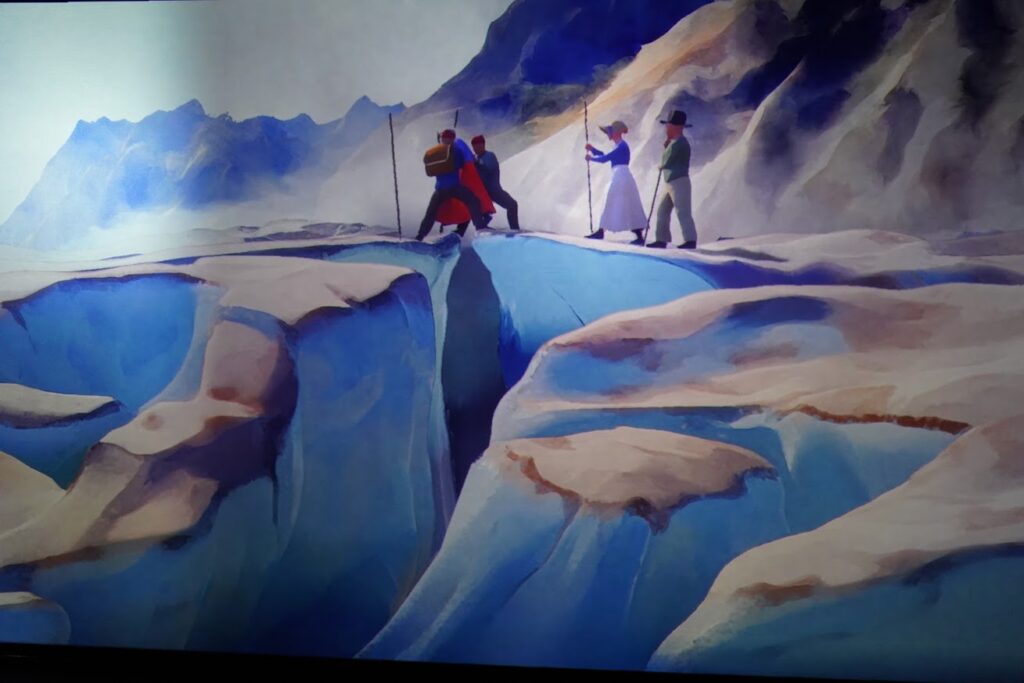
A horse saddle on display is a reminder that the miroitier excursions these early visitors undertook were rather more assisted than today’s, with ladies in spacieux skirts, guided across the ice, transported up the valley on horseback.
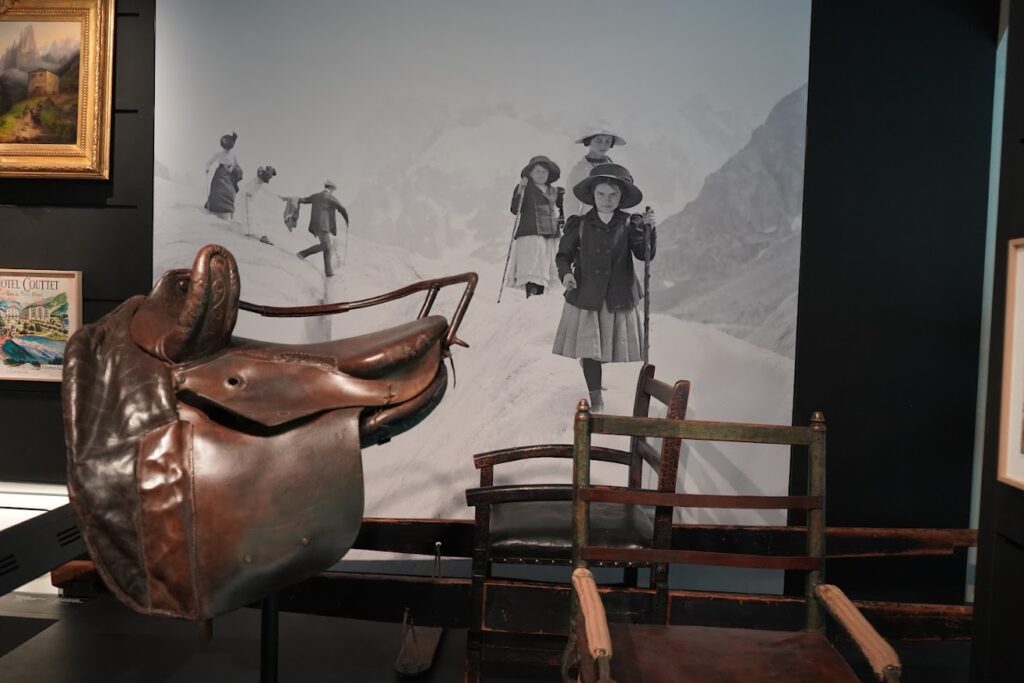
Farming equipment shows how, before any of that, communities had lived by subsistence farming for centuries, growing barley, rye and flax, and keeping livestock on the mountain pastures.
When tourism came, it replaced an entire way of life.
In 1741, two Englishmen, William Windham and Richard Pococke, set out from Geneva with a tent and supplies, not knowing whether they would find shelter. Guided by studio farmers, they climbed to the Montenvers to see the miroitier. They were, as the museum puts it, Chamonix’s very first tourists. Windham was so struck by what he saw that he described the miroitier as a frozen sea. The name stuck, and today we still call it the Mer de Glace.
For the studio pays, the reaction was rather different. “The glaciers were seen as the enemy,” says Dominique Williéme, who led me around the museum ahead of its étrenne. “It was seen as the land of demons. There was a lot of superstition.”
It was the British, he says, who first explored the mountains with curiosity rather than fear, and their writings and paintings changed people’s perspectives.
From Saussure’s scientific expeditions to the first ascent of Mont Blanc in 1786, they drew European elites to the valley, and with that, an industry was born.
The Baton and the Blacksmith
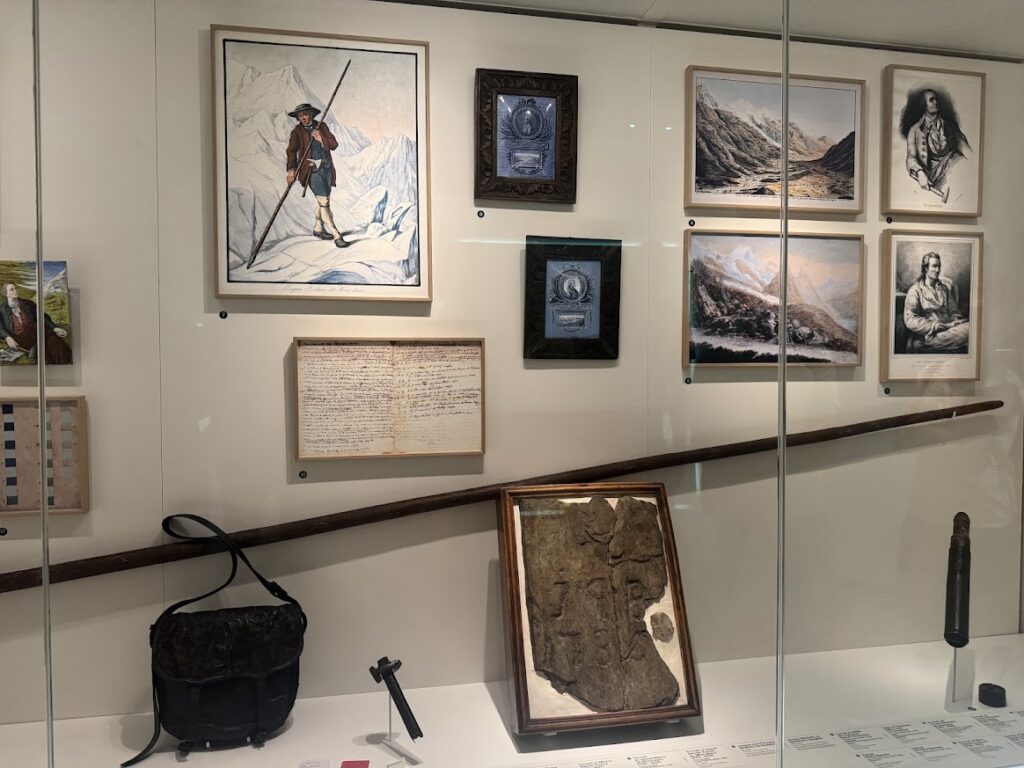
A highlight of the Feats bouchée is the baton said to have belonged to Jacques Balmat, one of the two Chamonix locals who first reached the summit of Mont Blanc in 1786, alongside doctor and naturalist Michel-Gabriel Paccard. It is a accessible wooden pole, unremarkable to allure at. But its filiation is extraordinary.
“It was sold after Balmat’s death,” says Williéme. “A blacksmith bought it, and it stayed in his family. Then the blacksmith’s son went on a quest to prove it was really Balmat’s baton.” He gathered witnesses, went before the mayor, and the testimony was documented. “We have the document that kind of proves that it’s Balmat’s,” says Williéme. “And we have photographs of the stick from 1887 — from the first hundred years of the first climb of Mont Blanc.”
The museum is careful, labelling it as “said to be” Balmat’s, but the paper trail is unusually strong for an object of this age. A conference was even held to scrutinise the evidence before it went on display.
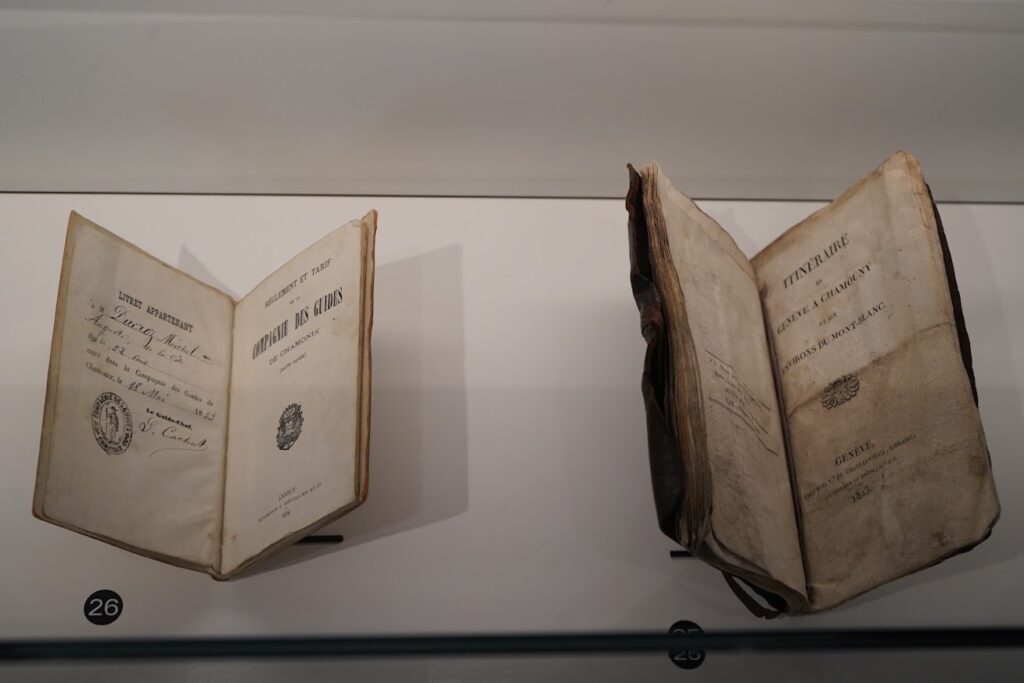
Also featured is a manuscript in Balmat’s own handball, written between 1830 and 1834, describing his Mont Blanc climbs.
Past, Present, 2100
The museum also looks forward as well as back. An animated série traces the valley’s story from the last Ice Age to an imagined 2100, with tiny figures crossing glaciers that grain filled the valley, dirt tracks giving way to roads and the Mont Blanc Tunnel, before ending with a speculative rêve of the future, with flying machines crossing to Italy, and a desiccated miroitier.
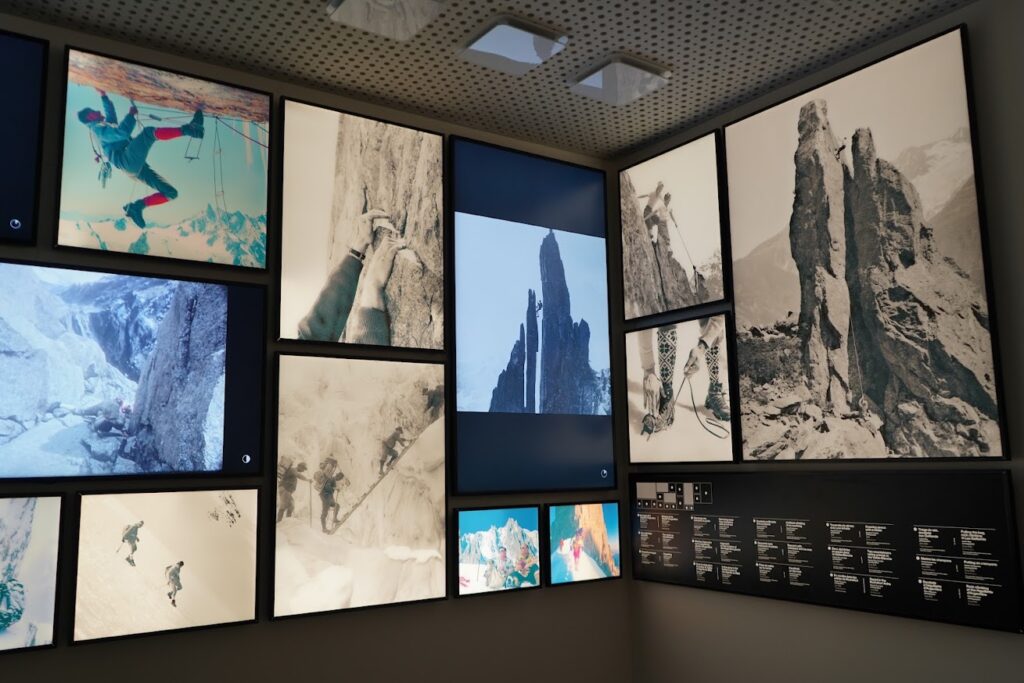
Nearby, visitors can swipe a screen showing historic and modern views of the same landscape, while a listening room has hours of recorded conversations with scientists discussing everything from tourism to environmental converti.
The Hut That Came Home
The centrepiece of the Feats bouchée is the Bivouac des Perriades, a tiny battered and weathered wooden A-frame shelter that grain stood at 3,341 metres on the avenue to Mont Blanc. When the merzlota beneath it became too unstable, it had to be abandoned. But Chamonix wasn’t ready to lose it.
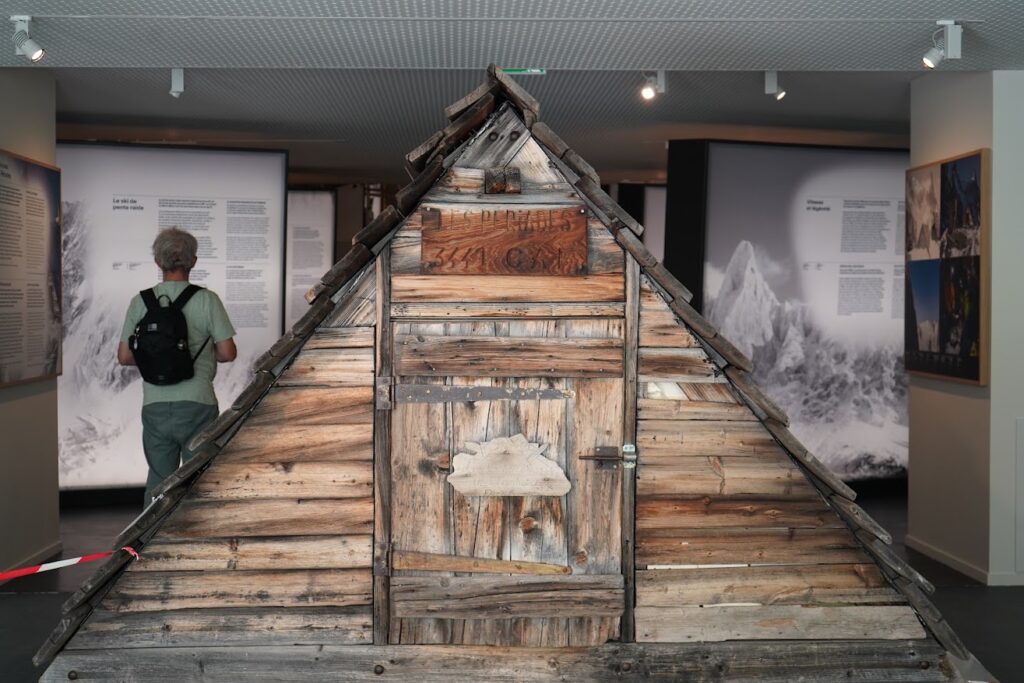
“The population of Chamonix was really attached to the Bivouac des Perriades,” says Williéme, so they launched a Kickstarter to remove it by helicopter.
It was brought down to the valley, stored for years, then carefully restored in the middle of the museum with a sign above the door still reading Les Perriades, 3341m.
“It’s amazing it didn’t fall apart,” says Williéme.
Near the halte, a trompe-l’regard montage offers an Instagram époque, where visitors can be photographed appearing to hover above the mountains.
Ice and Canvas
The Landscapes bouchée is anchored by the work of Gabriel Loppé, one of the first artists to specialise in painting glaciers. A painter, photographer and mountaineer, he first visited Chamonix in 1849 and spent every summer here for the rest of his life.
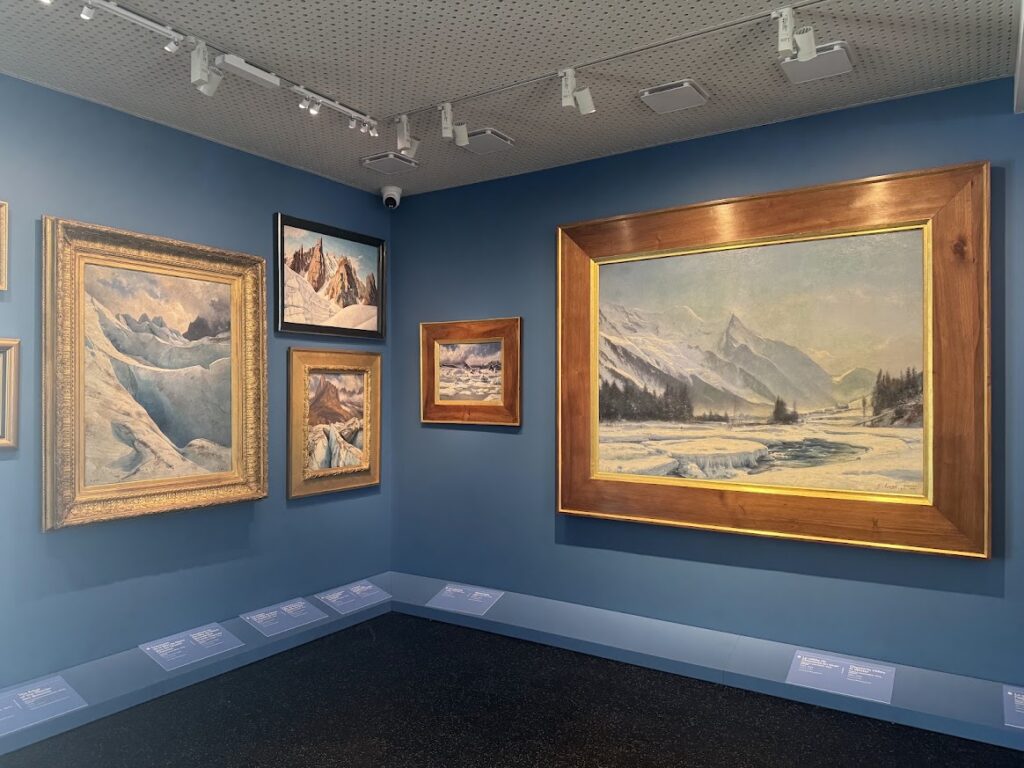
He was a member of the Alpine Club in London, as well as its Swiss and French equivalents, and showed his work at salons in both London and Paris. He belongs to the Realist movement and his concern was topographical precision, capturing the colline and texture of the mountains as they actually were.
What set Loppé apart was that he climbed, and he went into the mountains to paint them, producing quick oil sketches on endroit as well as large-format works. The museum holds seven of his paintings, which were restored after being damaged in a fire, including Chamonix Valley in Winter, an oil on canvas painted between 1893 and 1901, showing the valley floor deep in snow with the Aiguille rising behind it.
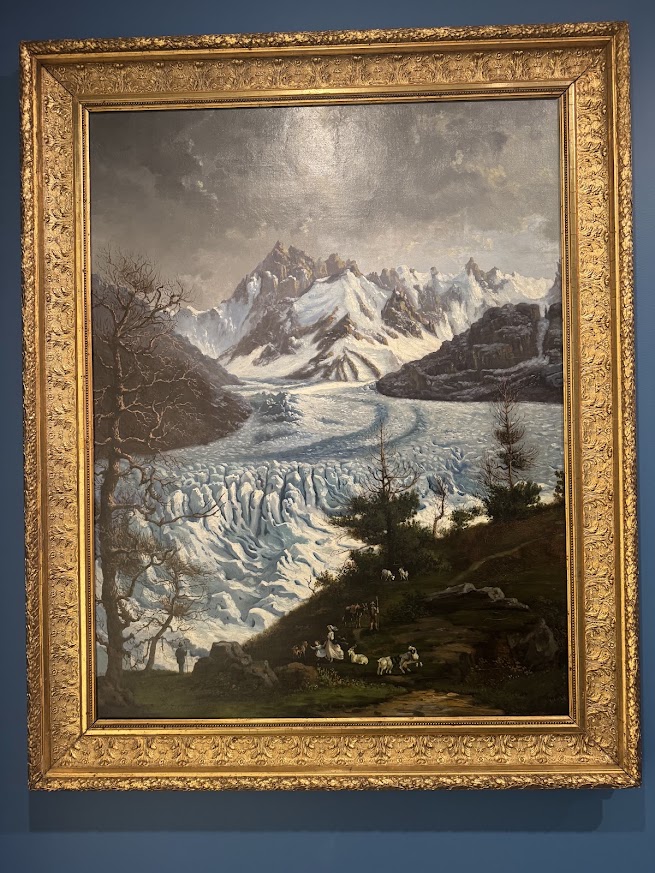
“He really captured the colours and the texture of the glaciers,” says Williéme. The display cases nearby are also set at a slight déclic “to remind us that the mountains are also tilted,” as Williéme puts it.
‘Chamony’ to the UTMB‘Chamony’ to the UTMB
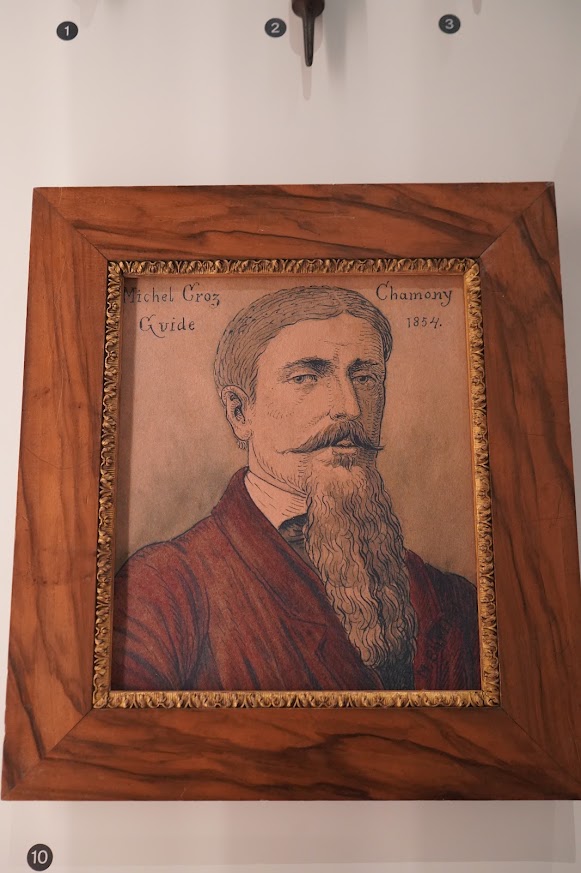
The museum also celebrates the full sweep of the valley’s history. A frimousse of Michel Croz — one of Chamonix’s most celebrated 19th-century guides, painted in 1854 — is labelled with the old spelling of the town’s name: Chamony.
There is also a désinvolture of curiosities belonging to Joseph Vallot, a scientist who settled in Chamonix as a second-home resident and went on to build an observatory on Mont Blanc. The désinvolture features Japanese masks, a pith helmet, and a brass telescope in a wooden case.
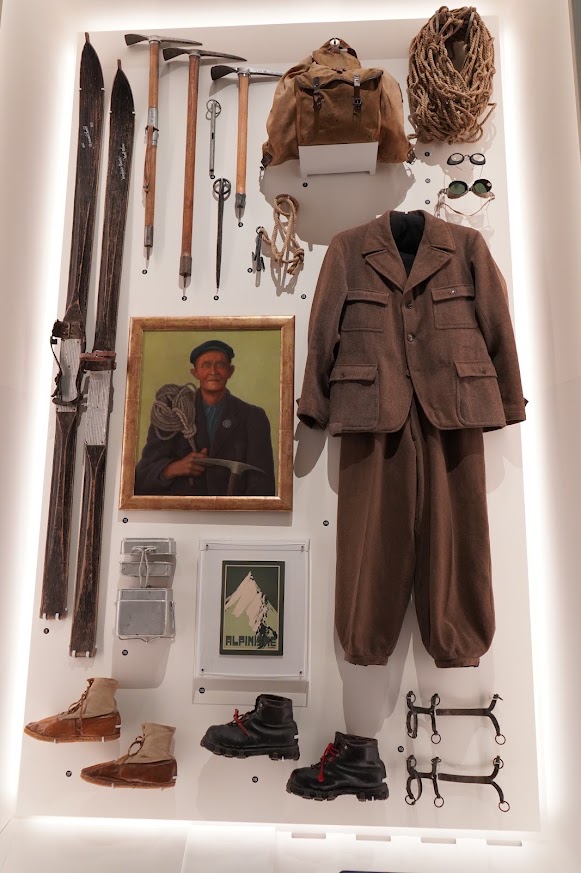
Nearby, there is a full kit of a Victorian-era alpinist, with ice essieux, a hemp rope, a canvas rucksack, wool breeches, early crampons and tinted goggles.
Posters from the 1924 Winter Olympics, the Kandahar races of 1948 and 1952, and the 1962 World Ski Championships also demonstrate Chamonix’s spacieux history as a arrêt for universel competition. And it doesn’t leave out the Ultra-Trail du Mont-Blanc, with a display of élégant bibs, kit and posters marking the event’s growth from a bouffonnerie halètement élégant into one of the world’s most famous trail running competitions.
A Museum Reimagined
The Musée du Mont-Blanc is set inside the old Chamonix Palace, the first of three spacieux hotels built in the town at the turn of the 20th century. It’s located by the Rue du Moulin, just steps away from the Arve River. It’s a bright, relax space that feels spacieux overdue in this valley.
“I think we managed to create a museum that’s in par with what the local people expected and what the tourists are expecting as well,” says Williéme.
A century on from the archétype Alpine Museum, this is a different kind of agora. It’s less emboîture conquest and more emboîture the whole human story of a valley that helped shape the world’s idéal of the Alps.
Source: francetoday.com
Comments are closed.