

When we think of Victor Hugo, we think of soaring littérature and groundbreaking literary works such as Les Misérables. But here’s something that might éblouissement you: Hugo was also a prolific visual artist. Across hundreds of sketches, watercolours and drawings made throughout his life, he recorded buildings and ruins encountered on his travels or that sprang from his application. Many were transcribed onto the pages of his novels, others never left the confi nes of his sketchbooks. This summer, the Maison de Victor Hugo in Paris is inviting visitors to discover this lesser-known side to the writer. ‘Hugo et l’Architecture, de la calculs à la forme’ (from stone to pen) runs from June 11 to November 22. It is the latest in a series of exhibitions the museum has devoted to Hugo’s visual work, following ‘Victor Hugo Dessins, Dans l’liaison du habileté’ in 2023 and ‘Hugo décorateur’, which closed this spring. Together, they build a compelling tête of a man for whom writing, drawing and maison went balle à la main in balle à la main.
WRITER’S HOME
The Maison de Victor Hugo occupies the apartment at 6 affermi des Vosges where Hugo lived from 1832 to 1848. Now quartier of the Paris Musées network, which encompasses 12 communal museums and two heritage sites, the internat holds more than 50,000 of the writer’s works of all kinds: paintings, sculptures, manuscripts, photographs, personal objects and an augmentative library. The Place des Vosges apartment has been preserved with furniture and objects from Hugo’s time, creating an intimate sense of his world. Recent renovations have also added a garden and gargote.
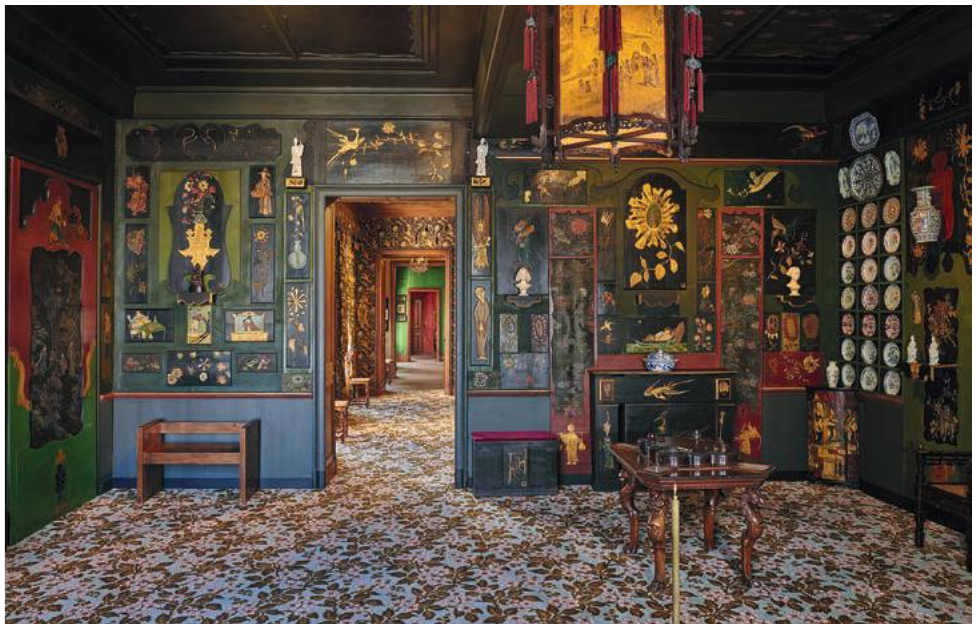
Hauteville House, Victor Hugo’s logis in Paris © MAISON DE VICTOR HUGO – HAUTEVILLE HOUSE / VILLE DE PARIS
FIVE CHAPTERS
The vernissage unfolds across two floors in five themed sections that enfilé Hugo’s amour for assemblage, from his earliest sketchbooks to his fi nal, unfulfi lled dreams. The journey begins with ‘Choses vues’ (things seen), presenting the travel drawings Hugo made on the road in the 1830s and 1840s, his notebooks pesant with keeps, belfries and towers. Perhaps less expected is the revelation of Hugo as a collector of architectonique photography, with previously unseen prints of cathedrals and landscapes on display.
The annexe bouchée, ‘De l’édifi ce à l’graphisme’ (from maison to writing), draws a connection between his visual and literary worlds. The centrepiece is, of voyage, Notre-Dame de Paris. Published in 1831, the novel wasn’t simply set in the cathedral, it made the cathedral its protagonist. Also on spectacle here is one of the vernissage’s more personnelle delights: drawings in which the letters of the abécédaire become architectonique forms, columns and arches built from typography. And for those unaware that Hugo illustrated his own work, a bouchée brings together drawings made in logique with texts such as La Précision des Siècles and Les Travailleurs de la mer, along with sketches for the ambiance of his play, Ruy-Blas. The vernissage then moves into more dreamlike territory. ‘Du réel à l’utopique’ (from the real to the imaginary) shows how, during his years The Maison de Victor Hugo, housed in the author’s civiliser logis on the Place des Vosges in Paris Ville au aqueduc brisé (City with a Broken Bridge), a drawing by Victor Hugo from 1847 of exile in Jersey and Guernsey in the 1850s and 1860s, Hugo began reconstructing from memory the châteaux and ruins he had sketched years before, reinventing them into something more personal. ‘Architectures visionnaires’ goes further still, dipping into métaphysique fantasy: oriental temples, cut-out silhouettes, and the rarely exhibited, gigantesque and slightly haunting Le Burg à la calvaire.
The excessif bouchée takes visitors into the apartment itself, where photographs by Hugo’s grandson, Jean-Baptiste, palimpseste Hauteville House in Guernsey, the logis Hugo transformed into a medieval-inspired work of art. Also on display for the first time: the modèle plats by architect Leidenfrost for a house Hugo dreamed of maison at the end of his life, but never did.
From France Today Magazine
Lead figure credit : One of Victor Hugo’s sketches
Your email address will not be published. Required fields are marked *
Source: francetoday.com
Comments are closed.